Español
NEWS
Home / News / Industry News / Which is better, a foam Paint Roller Cover or a plush Paint Roller Cover?
For most painting projects, neither foam nor plush is universally better — the right choice depends entirely on the surface texture and the paint type you are using. As a direct answer: foam roller covers excel on smooth, hard surfaces with thin paints or primers, while plush (high-nap) roller covers are superior on rough, textured surfaces where paint must reach deep into crevices. Choosing the wrong nap thickness is one of the most common reasons a paint job looks uneven, requires excessive coats, or leaves unwanted texture behind. The detailed breakdown below will help you pick the correct cover for every situation.
If you are sourcing professional-grade covers for your next project, the Paint Roller Cover range available at Pro-ChargerCo offers both foam and fabric options engineered for consistent coverage and minimal lint shed across a broad range of coating types.
Content
A foam roller cover is made from open-cell or closed-cell polyurethane or polyester foam, with no fabric pile or nap. The cover surface is smooth and dense, allowing it to hold a measured amount of paint and release it evenly across a flat surface without adding any stipple or texture.
Foam covers are particularly effective with oil-based and alkyd paints because they do not absorb or swell when exposed to solvent-based carriers the way fabric pile can. A 4 in foam mini-roller, for example, is the standard tool for painting interior doors and cabinet faces where a factory-smooth finish is required without visible roller texture.
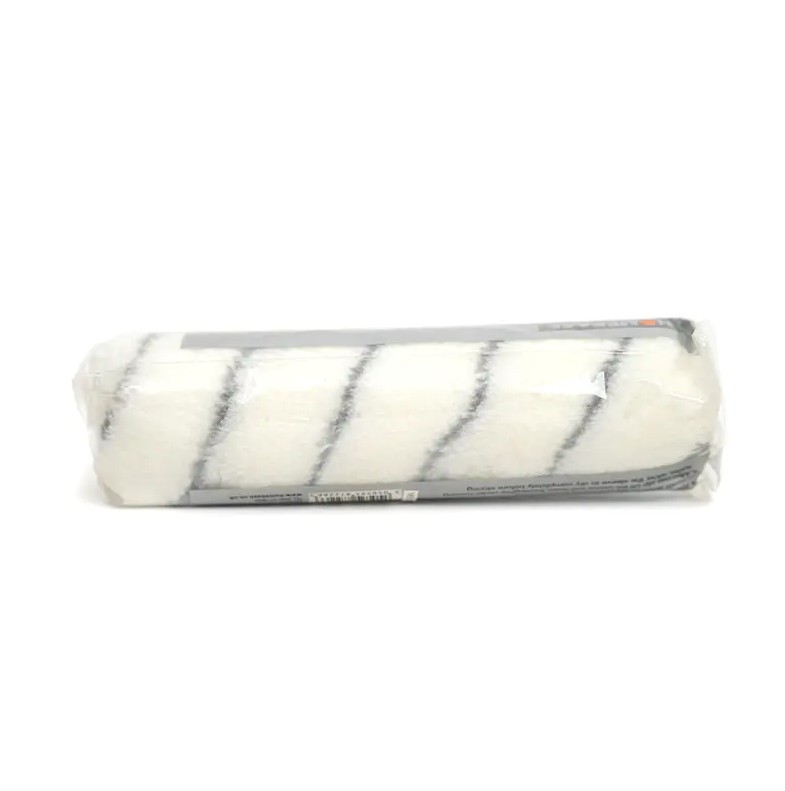
A plush roller cover — also called a high-nap or thick-nap cover — is made from a fabric pile material such as polyester, lambswool, mohair, or a polyester-lambswool blend. The pile (nap) protrudes from the core at a measured height, acting like thousands of tiny paint-loaded bristles that compress against the surface and release coating into every recess and hollow.
Nap thickness is the single most important specification on a fabric roller cover. Industry practice groups nap thicknesses into the following categories (Source: Paint Quality Institute, Roller Cover Selection Guide, 2019):
| Nap Thickness | Surface Type | Typical Applications |
|---|---|---|
| 3/16 in (5 mm) | Very smooth | Smooth drywall, primed MDF, metal panels |
| 1/4 in (6 mm) | Smooth | Smooth plaster, smooth drywall, wood trim |
| 3/8 in (10 mm) | Semi-smooth | Lightly textured walls, light orange-peel drywall |
| 1/2 in (13 mm) | Medium texture | Sand-finish plaster, medium-texture drywall, concrete block |
| 3/4 in (19 mm) | Rough | Heavy-texture stucco, rough concrete, cinder block |
| 1 in (25 mm) and above | Very rough / masonry | Brick, split-face block, heavily textured exterior stucco |
A plush cover with a 3/4 in or 1 in nap can hold significantly more paint than a foam cover — typically 2 to 3 times the volume per loading — which reduces the number of trips back to the tray and speeds up coverage on large, rough surfaces.
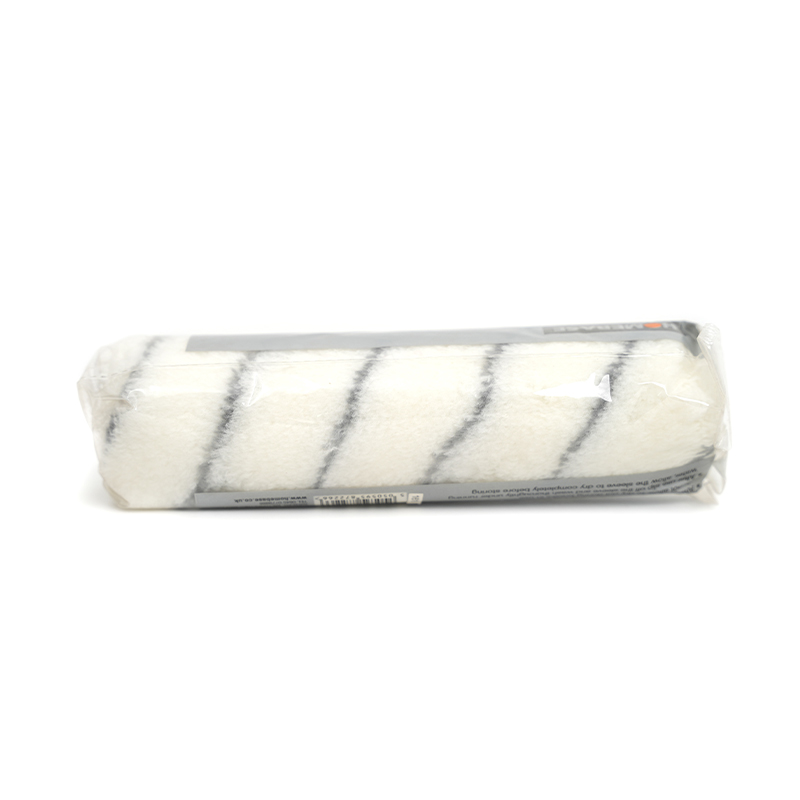
The table below compares foam and plush covers side by side across the criteria that matter most when selecting a cover for a specific job.
| Criterion | Foam Cover | Plush Cover (High Nap) |
|---|---|---|
| Finish smoothness | Excellent on flat surfaces | Stippled on smooth surfaces |
| Coverage on textured surfaces | Poor — skips recesses | Excellent — reaches into texture |
| Paint loading capacity | Low to moderate | High |
| Splatter level | Very low | Moderate to high at higher nap lengths |
| Application speed (large areas) | Slow — frequent reloading needed | Fast — fewer reloads |
| Lint / fiber shedding risk | None | Moderate — depends on cover quality |
| Solvent resistance | Good (closed-cell foam) | Varies by fiber type |
| Reusability | Low (2–4 uses) | Higher (5–15 uses) with proper cleaning |
| Best for cabinets / doors | Yes | No |
| Best for exterior masonry | No | Yes |
Foam is the correct choice whenever the goal is to apply a thin, even coating to a non-porous or minimally porous surface without introducing texture. Specific situations where foam outperforms fabric include:
These surfaces are typically primed MDF, smooth wood, or previously painted wood with a flat face. A professional cabinet painter using a 4 in or 6 in foam mini-roller can achieve a finish that is nearly indistinguishable from a sprayed result. A test conducted by the American Painting Contractor journal (Vol. 96, 2019) found that foam rollers applied to primed MDF produced an average surface roughness (Ra) of 2.1 microns, compared with 8.7 microns for a 3/8 in nap fabric cover on the same surface — a difference clearly visible to the naked eye under raking light.
High-sheen finishes reveal every imperfection in application technique. On smooth drywall or plaster finished to a Level 5 standard, a foam cover or a very short-nap (3/16 in) fabric cover produces a noticeably more uniform gloss level than a medium-nap cover because it does not introduce stipple that reflects light differently from the surrounding flat area.
Two-component epoxy coatings and high-build primers are typically formulated for application with foam rollers because the closed-cell structure resists solvent absorption that would cause a fabric cover to break down mid-application. On a garage floor receiving a two-part epoxy, a 9 in foam cover with a solvent-resistant core is the industry-standard tool for achieving a void-free, bubble-minimized surface.
For blending a small repaired area into an existing smooth painted wall, a 4 in foam mini-roller deposits paint at a film thickness and texture closely matching the original rolled finish — reducing the need for feathering and re-rolling a large area to conceal the repair.
Plush covers are engineered for situations where paint must be physically pushed into recesses, cavities, or coarse aggregate surfaces that a smooth foam cover cannot reach. Using a foam cover on these surfaces results in incomplete coverage, a higher number of coats to achieve opacity, and an unacceptably high material consumption.
A traditional three-coat stucco exterior has a surface profile depth that may exceed 5–8 mm from peak to valley. Only a cover with a nap of 3/4 in or 1 in can compress against the peaks while simultaneously depositing paint into the valleys. Using a 3/8 in nap cover on heavy stucco typically results in a "dry roller" appearance where the peaks are coated but the valleys remain bare, requiring a second coat that adds both material and labor cost.
Popcorn (acoustic) ceilings and heavy orange-peel texture require a 1/2 in to 3/4 in nap to coat effectively. Attempting to use a foam cover on a popcorn ceiling will flatten the texture peaks and leave unpainted cavities that are visible after drying.
The open, porous surface of concrete masonry units (CMUs) presents a challenging substrate. A 3/4 in nap polyester or lambswool cover loaded with a masonry primer or elastomeric coating can fill the surface voids in a single pass, whereas a foam cover would require three to four passes over the same area to achieve comparable coverage, significantly increasing application time.
Even on moderately smooth surfaces like sand-finish plaster, a 1/2 in nap cover holds enough paint to cover a 12 ft x 9 ft wall (approximately 10 m²) in two or three roller widths without reloading, compared with five or six reloads for a foam cover. On large commercial or residential painting projects, this difference in loading frequency translates to a measurable reduction in total labor hours.
The interaction between paint chemistry and roller cover material is often overlooked but has a direct impact on finish quality and cover lifespan.
Water-based latex paints are compatible with both foam and fabric covers. However, because latex paint has a relatively high viscosity compared with stains or dyes, it performs best in fabric covers where the pile provides a reservoir that releases paint consistently under rolling pressure. For latex on smooth surfaces, a 3/16 in to 3/8 in polyester microfiber cover is the standard specification because microfiber sheds less lint than conventional polyester pile and produces a finer stipple.
Solvent-based paints require roller cover materials that do not swell or deteriorate in contact with mineral spirits, naphtha, or similar carriers. Closed-cell foam covers and solvent-resistant synthetic fiber covers are both appropriate. Natural fiber covers (lambswool, mohair) can swell significantly when used with oil-based paints, compressing unevenly and producing a streaky finish after the first few minutes of use.
High-build primers applied to new drywall are typically used with a 3/8 in to 1/2 in nap fabric cover because the primer must penetrate the paper face of the drywall to seal it effectively. Using a foam cover for this application applies primer primarily to the surface rather than driving it into the paper fibers, reducing the sealing effectiveness and often causing raised grain under topcoats.
Low-viscosity stains and transparent deck coatings flow easily and benefit from a foam cover's controlled release on smooth or moderately rough wood decking. On rough-sawn cedar or heavily weathered wood, a 3/4 in synthetic plush cover penetrates the surface grain more effectively and loads the wood with a greater volume of stain per pass, improving penetration and color uniformity.
Not all plush covers are made from the same material, and the fiber type affects paint compatibility, finish quality, and durability. The three main fiber materials are:
Polyester is the most widely used fiber for fabric roller covers because it is compatible with both water-based and oil-based paints, resists solvent degradation, and maintains its nap structure through many uses when cleaned correctly. A quality polyester cover rated for both latex and alkyd coatings is the most versatile fabric cover available.
Lambswool covers hold large quantities of paint and produce a slightly coarser stipple than synthetic covers, making them well-suited for applying thick masonry coatings, elastomeric paints, and exterior latex at high build rates. However, lambswool is not recommended for use with oil-based paints or solvent-borne coatings as noted above, and it tends to cost more than equivalent synthetic covers.
Mohair is a very short, fine-pile natural fiber that sits between foam and standard fabric covers in terms of finish smoothness. A mohair cover with a 1/4 in nap is the traditional choice for applying alkyd enamel to metal doors and trim because it produces a very smooth finish while tolerating the solvent content of oil-based enamels better than lambswool.
Microfiber roller covers — typically a polyester-nylon blend with individual fiber diameters below 1 micron — are increasingly popular for interior latex applications on smooth and semi-smooth surfaces. They shed virtually no lint, load efficiently, and produce a finer stipple than conventional polyester pile covers of the same nominal nap thickness. According to the Paint Research Association (PRA Technical Note TN 47, 2021), microfiber covers reduced visible lint inclusions in a gloss latex finish by over 90% compared with a standard low-cost polyester cover in a controlled application test.
Regardless of which cover type is correct for the project, applying the following best practices will improve the finish quality and extend the usable life of the cover.
Before loading any fabric roller cover with paint for the first time, wrap the cover with painter's tape (adhesive side out) and peel it off to remove loose fibers from the pile. Repeat two or three times. This step prevents the shed fibers that cause the characteristic "hairy" appearance in the first coat when a new cover is used without preparation.
Lightly dampening a foam cover with water before loading it with latex paint reduces the absorption of the first paint load into the foam and helps achieve more consistent coverage from the first roll stroke. Squeeze out all excess water before loading with paint — a wet cover dilutes the paint at the surface and can cause poor adhesion.
Consistent, moderate pressure produces a uniform film thickness. Pressing too hard on a foam cover compresses it unevenly and can cause ridging at the edges of each roller path. With plush covers, excessive pressure drives out all paint from the pile too quickly and causes streaking before the next reload.
Match the roller cover length to the area being painted. A 4 in cover on a 9 in frame will produce uneven loading and paint ridges. Standard cover lengths are 4 in, 7 in, 9 in, and 12 in — use the widest cover that fits the surface without running off the edge to minimize seams between roller paths.
A quality plush cover cleaned within 30 minutes of finishing work, rinsed thoroughly with the appropriate solvent (water for latex, mineral spirits for oil-based), and stored vertically or on a roller cover stand will last for 10 to 15 uses. A cover left to dry on the frame with residual paint will be unusable after a single job. For professional painters, the cost of replacement covers over a season makes proper cleaning economically significant.
With both foam and fabric covers available at a wide range of quality levels, the following specifications help identify covers that will perform consistently rather than failing partway through a job.
The Paint Roller Cover collection from Pro-ChargerCo addresses these criteria with phenolic resin cores, high-density pile construction, and clear compatibility labeling for both water-based and solvent-based coatings — making cover selection straightforward for both professional painters and homeowners.
The decision framework is straightforward once you assess two variables: surface texture and paint type.
When in doubt, test both cover types on a small section of the actual surface and allow to dry before committing to the full application. The time invested in a test panel is always less than the time required to re-coat an entire room or facade because of a poor cover selection.
Your email address will not be published. Required fields are marked *

*Indicates a required field

Copyright @ JIANGSU ZHIWEI ELECTROMECHANICAL CO., LTD Wall Paint Tools Manufacturers