Español
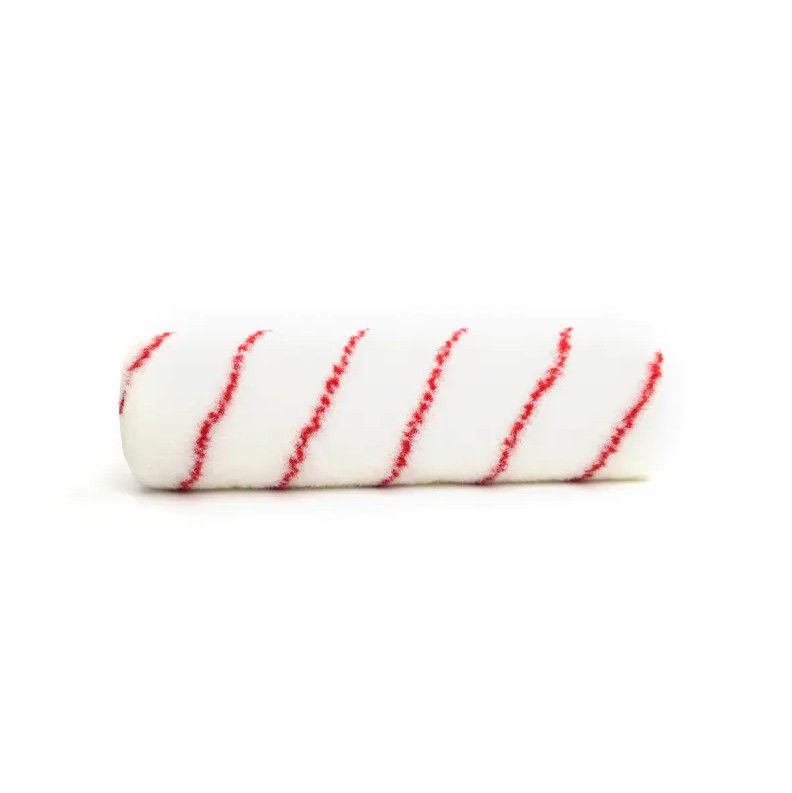
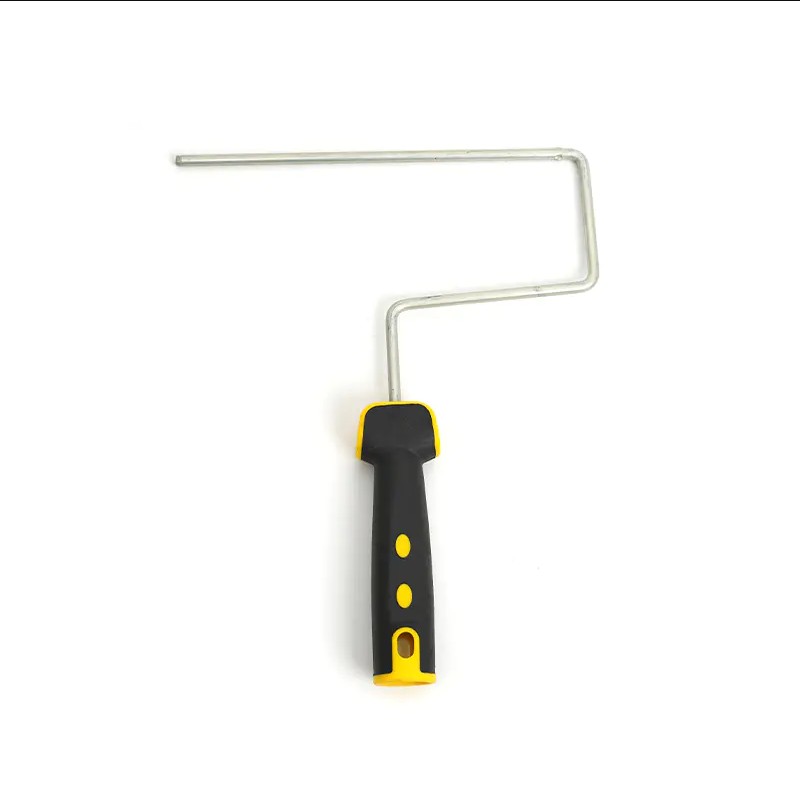
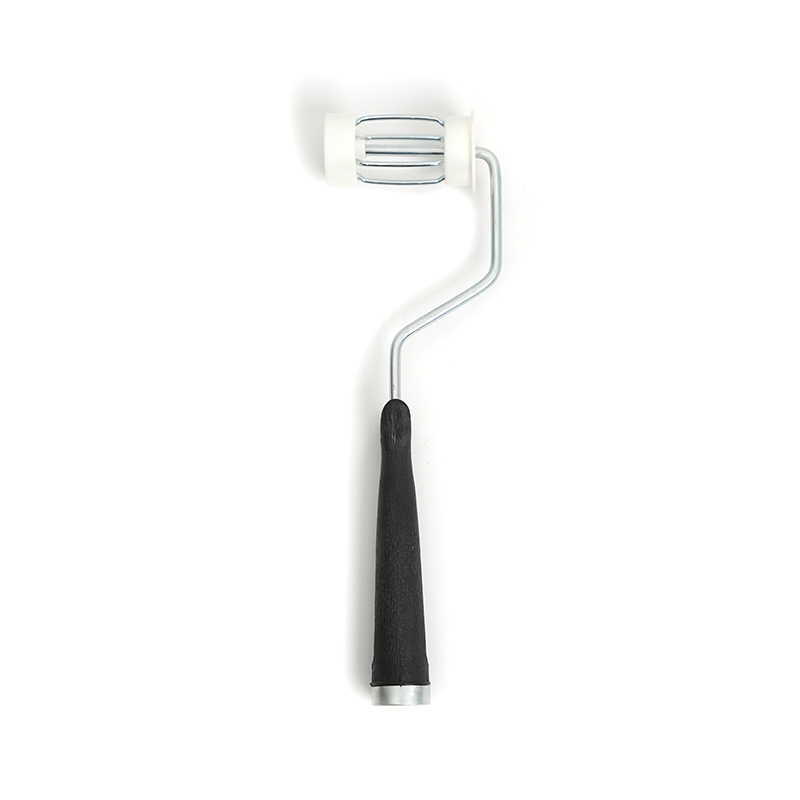
A paint roller frame is the structural tool that holds a roller cover in place during painting, allowing the user to apply paint quickly and evenly across large flat surfaces such as walls, ceilings, and floors. It consists of a handle, a cage or wire frame, and a rotating axle onto which a replaceable roller cover (sleeve) is fitted. The frame itself does not apply paint—it is the mechanical support system that makes the roller cover functional, and its quality directly determines how efficiently and comfortably a painting project can be completed.
Paint roller frames are available in widths ranging from 4 inches (100 mm) for detail work up to 18 inches (450 mm) or more for large-scale commercial applications. Selecting the right frame—matched to the correct roller cover and extension pole—can reduce painting time on a standard room by 50% or more compared to brush application alone.
Content
- 1 Anatomy of a Paint Roller Frame: Key Components
- 2 Paint Roller Frame Sizes and Their Applications
- 3 Frame Materials: How Construction Quality Affects Performance
- 4 How a Paint Roller Frame Works with Roller Covers
- 5 Extension Pole Compatibility and Its Practical Importance
- 6 Specialty Roller Frames for Specific Applications
- 7 Choosing the Right Roller Frame: Key Factors to Evaluate
- 8 Roller Frame vs. Roller Cover: Understanding the Difference
Anatomy of a Paint Roller Frame: Key Components
Understanding each part of a roller frame helps explain how the tool works and what to look for when evaluating quality.
Handle
The handle is the primary grip point and connects the user's hand to the rest of the frame. Handles are typically made from plastic, rubber-coated plastic, or wood, with ergonomic grips on professional-grade frames reducing hand fatigue during extended painting sessions. Most handles include a threaded socket at the end—standardised to a 3/8-inch UNC thread in most markets—that accepts extension poles, enabling ceiling and high-wall work without a ladder.
Connecting Rod (Shank)
The shank is the bent metal rod that connects the handle to the cage assembly. Its angle positions the cage at the correct working distance and angle relative to the handle, typically angled at approximately 45 degrees to allow comfortable rolling motion across a surface. In heavy-duty frames, the shank is thicker-gauge steel or aluminium to resist flex under load, which is particularly important when applying thick coatings or using heavier roller covers.
Cage or Wire Frame
The cage is the cylindrical wire or solid-end structure that the roller cover slides onto. It supports the roller cover along its length and allows it to spin freely as paint is applied. Two cage designs are common:
- Wire cage — Multiple metal wires run along the length of the cage, supporting the roller cover while minimising weight. This design is standard for general-purpose frames and provides good paint distribution by allowing the cover to flex slightly around the cage.
- Solid-end cage — End plates hold the axle rigidly, providing greater structural support for heavy roller covers. More common in professional and heavy-duty frames designed for frequent use with thick or textured coatings.
Axle and Bearings
The axle runs through the centre of the cage and is the pivot point around which the roller cover rotates. In budget frames, the cage rotates directly on the metal shank without bearings, creating friction that slows rotation and requires more physical effort. Quality frames incorporate nylon or ball bearings that allow the roller cover to spin freely with minimal resistance, reducing painter fatigue and producing a smoother, more even paint finish.
Paint Roller Frame Sizes and Their Applications
Frame width—measured as the length of the cage that accepts the roller cover—is the primary sizing dimension and determines which roller covers can be used with a given frame. Matching frame size to the task is one of the most practical decisions in any painting project.
| Frame Width | Typical Use | Surface Coverage per Pass | Best For |
|---|---|---|---|
| 4 in (100 mm) | Detail and trim work | Narrow bands | Doors, window frames, skirting boards |
| 6–7 in (150–180 mm) | Small to medium surfaces | Moderate | Furniture, cabinets, accent walls |
| 9 in (230 mm) | Standard residential | Most efficient for walls | Interior walls, ceilings (most common) |
| 12 in (300 mm) | Large residential / light commercial | High | Open plan walls, garage floors |
| 14–18 in (355–450 mm) | Commercial and industrial | Very high | Warehouse floors, exterior facades, large ceilings |
The 9-inch (230 mm) frame is the most widely used size for residential interior painting because it balances coverage speed with maneuverability around door frames, corners, and window reveals. Wider frames deliver faster coverage on open surfaces but become difficult to control near edges and in confined spaces.
Frame Materials: How Construction Quality Affects Performance
The material from which a roller frame is manufactured affects its durability, weight, resistance to corrosion, and overall feel during use. Three primary materials are used in frame construction:
Steel
Steel is the most common cage and shank material across all price points. Low-cost frames use uncoated or lightly zinc-plated steel that is prone to rusting when exposed to water-based paints and cleaning water—a significant limitation since rusting cage wires can stain roller covers and introduce contamination into the paint film. Stainless steel or heavily chrome-plated steel frames resist corrosion indefinitely, making them practical for reuse across many projects with proper cleaning.
Aluminium
Aluminium frames are lighter than equivalent steel frames—typically 30 to 40% lighter by weight—and inherently corrosion-resistant, making them well suited for professional painters who use and clean their tools daily. The reduced weight becomes meaningfully important when working overhead on ceilings for extended periods, where tool weight directly contributes to arm and shoulder fatigue.
Plastic and Composite
Some budget frames use plastic handles and end caps. While acceptable for occasional use, plastic components flex more than metal under load, which reduces control and can cause the cage to wobble during application—resulting in an uneven paint finish. Professional-grade frames use plastic only for handle grips and ergonomic overmoulding, with metal for all structural components.
How a Paint Roller Frame Works with Roller Covers
The roller frame and roller cover are separate components designed to work together. The frame provides the structure and rotation mechanism; the cover holds the paint and transfers it to the surface. Understanding this relationship helps explain both how to use a roller correctly and why frame quality matters for finish quality.
The process of applying paint with a roller frame and cover involves four steps:
- Loading the cover — The fitted roller cover is rolled through paint in a tray, picking up paint in the fibres of the cover. The tray's ribbed ramp is used to distribute the paint evenly and remove excess to prevent dripping.
- Applying paint to the surface — The loaded cover is pressed against the surface and rolled in a slow, even stroke. The frame's bearing mechanism allows the cover to rotate freely as it contacts the surface, releasing paint uniformly across the fibres.
- Cross-rolling and blending — After the initial pass, the wet paint is rolled in a perpendicular or diagonal direction to blend lap lines and distribute paint uniformly, a technique commonly called "laying off."
- Cleaning and storage — After use, the roller cover is removed from the frame, and both are cleaned separately. The frame is rinsed and dried for reuse; the cover may be cleaned for reuse or discarded depending on its condition and the type of paint used.
The quality of the bearing system within the frame directly affects step two: a frame with poor bearings requires the painter to push harder to maintain rolling motion, which increases the risk of applying uneven pressure and creating visible roller marks in the finished paint film.
Extension Pole Compatibility and Its Practical Importance
One of the most valuable features of a paint roller frame is its ability to accept an extension pole, transforming a hand-held tool into one capable of painting ceilings and high walls without scaffolding or repeated ladder repositioning. The handle's threaded socket—standardised at 3/8-inch UNC (Unified National Coarse) thread in most countries—accepts extension poles ranging from 2 feet (600 mm) to 16 feet (4,800 mm) in length.
Using an extension pole with a roller frame delivers several practical benefits:
- Ceiling painting from the floor — A 4- to 6-foot (1.2–1.8 m) extension pole allows most users to paint standard 8- to 10-foot (2.4–3.0 m) ceilings while standing on the floor, eliminating the need to climb and reposition a ladder every few feet
- Faster coverage — Working from a standing position with an extended roller allows longer, more continuous strokes than working from a ladder, significantly improving coverage speed on large surfaces
- Reduced physical strain — Rolling from floor level with an extension pole places less strain on shoulders and neck than overhead painting from a ladder, reducing fatigue during extended sessions
- Better view of the surface — Standing at a distance while painting provides a wider field of view, making it easier to spot missed areas and lap lines before the paint dries
Specialty Roller Frames for Specific Applications
Beyond the standard straight-handle roller frame, several specialty frame designs address specific painting challenges that a conventional frame cannot handle efficiently.
Angled or Offset Roller Frames
Offset frames position the cage at an angle relative to the handle, allowing the roller cover to reach into corners and behind obstacles such as radiators and pipes that a straight frame cannot access. This design is particularly useful in bathrooms, utility rooms, and anywhere that standard painting clearances are restricted.
Adjustable-Width Frames
Some professional frames feature an adjustable cage width that can be expanded or contracted to accept roller covers of different lengths—typically ranging from 9 to 18 inches on a single adjustable frame. This reduces the number of frames required on a job site and allows painters to switch between detail and broad-coverage work using the same handle and shank.
Jumbo and Floor Roller Frames
Heavy-duty frames designed for floor painting or large exterior surfaces are built with reinforced shanks and larger-diameter cage axles to support the weight of wide, paint-saturated roller covers. These frames often accept covers 14 to 18 inches wide and are designed to be used exclusively with extension poles rather than handheld, as the loaded weight of the cover at this size is impractical to manage without pole support.
Paint-Fed Roller Frames
A specialised design used in high-production commercial painting, paint-fed frames connect to a pump and reservoir system that continuously delivers paint through a hollow handle and shank directly into the roller cover. This eliminates the need to reload from a tray, enabling uninterrupted painting across very large surfaces. These frames are more complex and expensive than standard frames and are suited to professional painting contractors rather than DIY use.
Choosing the Right Roller Frame: Key Factors to Evaluate
With the range of options available, selecting the appropriate roller frame for a given project requires evaluating several practical factors:
- Project scale — For a single room or occasional use, a standard steel 9-inch frame is adequate. For frequent professional use or large-scale projects, invest in a corrosion-resistant aluminium or stainless-steel frame with quality bearings.
- Surface type — Large open walls and ceilings suit 9- to 12-inch frames; detail areas around trim and in confined spaces need 4- to 6-inch frames; floors and wide exterior surfaces benefit from 14- to 18-inch frames.
- Bearing quality — Test the cage spin before purchasing: it should rotate freely with no grinding or resistance. Smooth rotation requires less effort and produces better results.
- Handle comfort and thread compatibility — Confirm the handle thread matches your extension pole before purchasing, particularly if buying frames and poles from different suppliers. The 3/8-inch UNC standard is near-universal but some specialty frames deviate.
- Cover compatibility — Confirm the frame cage diameter accepts the roller covers you intend to use. Most standard covers fit frames with a 1.5-inch (38 mm) inner diameter cage, but specialty covers for textured surfaces may require different dimensions.
- Cleanability — Frames with fewer crevices and rust-resistant materials are significantly easier to clean thoroughly, extending usable life and preventing contamination of future paint jobs.
Roller Frame vs. Roller Cover: Understanding the Difference
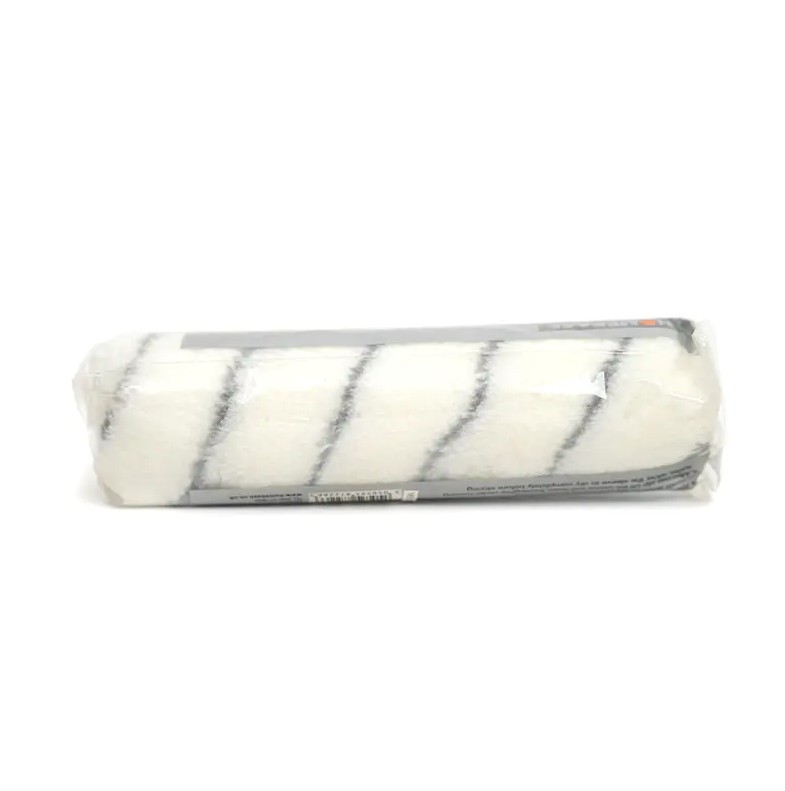
A common source of confusion for first-time buyers is the distinction between the roller frame and the roller cover (also called a roller sleeve or nap). They are sold and used together but serve entirely different functions and have separate selection criteria.
| Attribute | Roller Frame | Roller Cover (Sleeve) |
|---|---|---|
| Primary function | Structural support and rotation mechanism | Holds and transfers paint to the surface |
| Material | Metal (steel or aluminium) and plastic | Fabric fibres (polyester, wool, microfibre) on a cardboard or plastic core |
| Reusability | Reusable indefinitely with proper care | Reusable if cleaned promptly; often replaced per project |
| Selection criteria | Width, material, bearing quality, handle thread | Nap length, fibre type, surface texture compatibility |
| Paint quality impact | Affects evenness and control of application | Determines texture, stipple, and film thickness of finish |
The practical implication is that a high-quality frame paired with an inappropriate cover will still produce poor results—and vice versa. Both components must be selected to match the specific paint type and surface being coated. For example, a smooth wall finish requires a short-nap cover (3–6 mm) on a smooth-rolling frame, while a rough masonry exterior requires a long-nap cover (19–25 mm) to work paint into surface irregularities—but the frame selection criteria remain the same regardless of the cover used.