Español
Paint trays are used primarily to hold paint at a workable depth, load roller covers evenly, and remove excess paint before application — functions that together determine whether a painted surface turns out smooth and even or streaky and uneven. Beyond this core role, paint trays serve as a controlled paint reservoir for brushes, a mixing surface for blending small amounts of paint, a drip containment system that protects floors and surfaces, and a portable work station that can be repositioned as painting progresses. A correctly used paint tray is one of the most impactful tools in producing a professional-quality painted finish.
Content
- 1 Primary Use: Loading Roller Covers Consistently and Evenly
- 2 Brush Loading: Controlling Paint Volume for Clean Application
- 3 Drip Containment: Protecting Floors and Surfaces During Painting
- 4 Paint Tray Types and Their Specific Uses
- 5 Paint Tray Sizes: Matching Tray Width to Roller Length
- 6 Additional Uses Beyond Standard Roller Loading
- 7 How to Use a Paint Tray Correctly for Best Results
- 8 Cleaning and Maintaining a Paint Tray
Primary Use: Loading Roller Covers Consistently and Evenly
The most important function of a paint tray is to enable consistent, controlled loading of a paint roller cover — a task that directly determines the quality and uniformity of the painted surface.
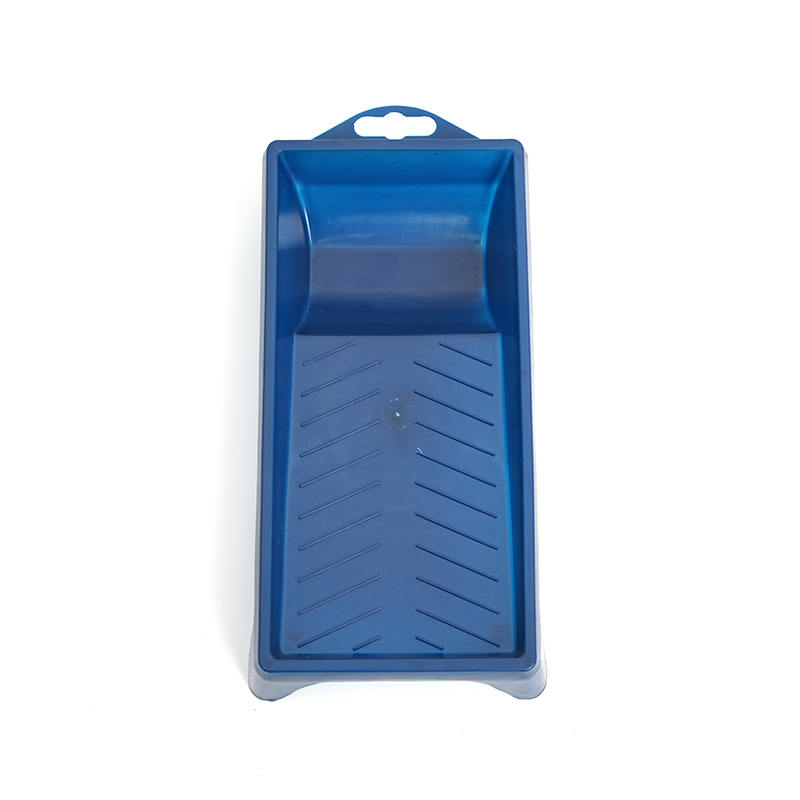
A standard paint tray has two distinct zones designed to work together. The deep reservoir well at one end holds the paint supply — typically filled to no more than one-third of its depth to prevent overflow when the roller is introduced. The ribbed or corrugated ramp rising from the well to the shallow end serves as a rolling surface: after the roller is dipped into the well to pick up paint, it is rolled up the ramp under moderate pressure, which distributes the paint evenly across the entire width of the roller cover and removes the excess that would otherwise drip or splatter on the wall.
This load-and-distribute sequence — dip in the well, roll up the ramp — is what separates tray-loaded rollers from rollers dipped directly into a paint can. A roller loaded from a can carries too much paint concentrated in the center of the cover, producing heavy, uneven application with pronounced ridges and runs. A correctly tray-loaded roller carries an even film across its full width, enabling smooth, streak-free application in a single pass.
Brush Loading: Controlling Paint Volume for Clean Application
Paint trays are equally useful for loading paint brushes — and for this purpose they offer a significant advantage over loading directly from a paint can.
When loading a brush from a paint can, the painter must control paint volume by wiping the brush against the can rim — a method that introduces air bubbles into the paint, contaminates the bulk paint supply with dried particles from previous use, and makes it difficult to judge exactly how much paint the brush is carrying. Using a tray allows the painter to pour out only the amount needed, dip the brush to the correct depth (typically one-third to one-half of the bristle length), and wipe off excess against the tray's ramp rather than the can rim.
This method keeps the bulk paint supply uncontaminated, gives better control over how much paint is applied with each brush stroke, and reduces drips during the transfer from tray to surface.
Drip Containment: Protecting Floors and Surfaces During Painting
A paint tray's raised edges and contained design make it an effective drip containment system — catching paint that runs off the roller or brush before it reaches the floor, drop cloth, or adjacent surfaces.
When a loaded roller is lifted from the tray, the brief moment before it contacts the wall is when dripping is most likely to occur. The tray positioned directly below the roller frame during this transfer catches any drops. Similarly, when a brush is lifted from the tray, excess paint that runs back off the bristles falls back into the tray rather than onto the floor. This containment function is particularly valuable when painting overhead surfaces such as ceilings, where gravity pulls paint downward from both the roller and the brush.
A tray also provides a stable resting place for the roller between wall sections — preventing the roller from being laid on the floor (where it picks up debris) or leaned against a wall (where it marks the surface).
Paint Tray Types and Their Specific Uses
Paint trays are manufactured in several configurations, each designed to suit different painting tools, scales of work, and user preferences.
| Tray Type | Material | Best Suited For | Key Advantage |
|---|---|---|---|
| Standard plastic tray | Polypropylene | General wall and ceiling painting with rollers | Lightweight, flexible, easy to flex clean when dry |
| Metal tray | Galvanized steel or tinplate | Oil-based paints, heavy-duty professional use | Solvent-resistant; rigid and durable over many uses |
| Mini / trim tray | Plastic | Mini rollers (4 inch), trim and detail brushes | Compact; less paint waste for small areas |
| Liner / insert tray | Thin plastic or foil | Any roller or brush use | Disposable liner eliminates tray cleaning between coats or colors |
| Bucket grid / roller bucket | Plastic bucket with metal grid | Large-area professional and commercial painting | Holds more paint; reduces refilling frequency on big jobs |
| Ladder hook tray | Plastic or metal with integrated hook | Painting at height on ladders or scaffolding | Hooks securely onto ladder rungs; frees both hands |
Paint Tray Sizes: Matching Tray Width to Roller Length
Paint trays are produced in widths that correspond to standard roller cover lengths. Using a tray that is narrower than the roller cover prevents the roller from distributing paint across its full width on the ramp — resulting in uneven loading and an inconsistent finish.
- 100–115mm (4 inch) mini trays: Designed for mini rollers used in tight spaces, radiators, window reveals, and trim work. Also suitable as a brush loading tray for narrow cutting-in brushes
- 180mm (7 inch) standard trays: The most common domestic size — fits the standard 7-inch roller used for general interior wall and ceiling painting. Available in both plastic and metal versions
- 230mm (9 inch) large trays: Fits the 9-inch roller preferred by professional decorators for faster coverage on open wall areas. The wider ramp allows full-width rolling with a single pass
- 300mm+ (12 inch+) extra-large trays: For commercial and industrial painting applications using extra-wide rollers on large floor, wall, or ceiling surfaces
As a practical rule, always use a tray that is at least as wide as your roller cover. A slightly wider tray than the roller is perfectly acceptable and gives extra room for maneuvering; a tray narrower than the roller forces the edges of the cover to hang over the sides, resulting in poor paint distribution.
Additional Uses Beyond Standard Roller Loading
While roller loading is the primary function, paint trays serve several additional practical purposes that make them versatile tools throughout the painting process.
Mixing Small Paint Quantities and Custom Colors
When a project requires a small amount of a custom color — blending a tint into base paint, mixing a touch-up color to match an existing wall, or combining two paints to achieve a specific shade — the paint tray's shallow, wide form provides an effective mixing surface. The flat ramp area offers enough space to combine colors with a brush or stirring stick, and the depth of the well allows moderate quantities of mixed paint to be held without risk of overflow.
Straining Paint to Remove Lumps and Skin
Paint that has been stored for some time may develop a skin on its surface or lumps within the body of the paint. Pouring the paint through a mesh or cloth strainer into the tray before use removes these contaminants and produces a clean, lump-free paint supply that applies smoothly without leaving raised texture on the painted surface. A paint tray — rather than a can — makes this straining step practical by providing a wide opening that a strainer can span easily.
Holding Multiple Colors for Decorative Painting
For decorative painting techniques such as sponging, ragging, color washing, or stenciling, a mini tray or a divided tray insert allows two or more colors to be held simultaneously — each loaded onto a separate brush or sponge without cross-contamination. This use makes the tray a versatile staging platform for multi-color decorative work beyond standard flat painting.
Waste Paint Containment During Brush and Roller Cleaning
At the end of a painting session, the tray can be used to hold dirty rinse water or solvent during brush and roller cleaning — containing the contaminated liquid and preventing it from spilling onto floors or drains. Once cleaning is complete, the waste paint-water mixture can be disposed of responsibly rather than poured directly down a drain.
How to Use a Paint Tray Correctly for Best Results
Using a paint tray correctly is simple, but small technique mistakes reduce its effectiveness significantly. Following these steps ensures consistent roller loading and a higher-quality painted finish.
- Fill to the correct level: Pour paint into the deep well end to a depth of approximately 25–30mm — enough to fully immerse the roller's lower surface when dipped, but no more than one-third of the well's depth. Overfilling causes paint to overflow onto the ramp during rolling
- Dip the roller fully into the well: Submerge the entire width of the roller cover into the paint, rotating it forward and backward to ensure the full cover surface picks up paint evenly from all sides
- Roll the loaded roller up the ramp with moderate pressure: Roll from the well end toward the shallow end, pressing firmly enough to distribute paint across the full cover width. Roll back and forth two or three times — this step removes excess paint and prevents drips
- Work paint back into the well as the tray level drops: As the session progresses, the well level drops. Tilt the tray slightly toward the well end to pool remaining paint, or top up from the main paint supply before the well runs too low to properly load the roller
- Use a tray liner for color changes or breaks: When switching colors or pausing for more than 30 minutes, a tray liner allows the tray to be kept in use without the time-consuming full cleaning process between uses
- Cover the tray when pausing for extended periods: If leaving the tray for more than an hour, cover it tightly with plastic wrap or a lid to prevent the paint surface from drying and forming a skin that contaminates the fresh paint below
Cleaning and Maintaining a Paint Tray
A paint tray that is properly cleaned after each use lasts for many years. Neglected trays accumulate layers of dried paint that reduce the effectiveness of the ramp, cause paint to dry unevenly during future sessions, and eventually crack the tray material as dried paint layers expand and contract.
- Water-based paint: Pour excess paint back into the tin, wipe the tray with a paper towel to remove the bulk of remaining paint, then rinse under warm running water while scrubbing with a stiff brush. Plastic trays can also be flexed to crack and release dried paint film if cleaning is slightly delayed
- Oil-based paint: Pour excess back into the tin, wipe down with rags, then clean with white spirit or mineral spirits using a cloth or brush. Follow up with warm soapy water to remove solvent residue before storing
- Tray liners as a cleaning shortcut: Using a disposable plastic or foil tray liner eliminates the cleaning step entirely for most sessions — simply remove and discard the liner, leaving the outer tray completely clean and ready for immediate reuse